
Your Professional Textile Needle Machine Manufacturer & Supplier
Jiangsu Feng Te Technology Co., Ltd., was established in 2019 as a manufacturer specializing in textile finishing machinery. The company focuses on the development and production of equipment used in sanding, raising, shearing, and washing processes. Its product range includes multiple series such as sanding machines, raising machines, shearing machines, drum dryers, sueding machines, and washing equipment, designed to support a wide variety of production needs and process requirements.
-
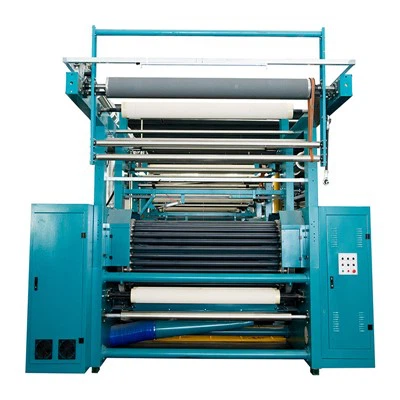
![Textile Needle Punch Machine]() Textile Needle Punch Machine
Textile Needle Punch MachineThe needle punch machine is the core equipment in the nonwoven production line. It uses barbed needles to repeatedly puncture the fiber web, causing the fibers to entangle and interlock. This process

Why Choose Us
Customization
We offer tailored solutions based on customer requirements such as production capacity, process conditions, and workshop layout, delivering non-standard equipment to improve efficiency and application flexibility.
Service and Support
We provide full after-sales support, including installation, commissioning, operator training, and ongoing technical assistance, ensuring stable equipment performance in daily operation.
R&D Capability
The company operates a dedicated R&D team and introduces 1–2 new products each year. So far, it has obtained 31 patents and 7 software copyrights, supporting continuous product improvement and technical development.
Global Presence
Our equipment has been supplied to countries including Egypt, Turkey, India, Vietnam, and Brazil. Through consistent product performance, we have built stable cooperation with international clients and established a reliable global market presence.
Specification
|
Working Width |
1600mm - 6000mm (Customizable on request) |
|
Needling Frequency |
800 - 1500 (strokes/min) |
|
Needle Density |
3000 - 8000 (needles/meter) |
|
Main Motor Power |
15kW - 60kW |
|
Max Output Speed |
1 - 12 (m/min) |
Key Features of Textile Needle Machine
Needling Density Control
Needling density control is one of the pivotal features of a textile needle machine. It determines the number of needle penetrations per unit area, thus controlling the compactness and thickness of the fabric. The ability to adjust needling density allows manufacturers to create a wide range of fabric textures and strengths, accommodating different applications.
Needle Penetration Depth
The penetration depth of the needles deeply influences the final product's properties. This feature controls how deeply the needles penetrate through the fiber web, affecting the fabric's density, thickness, and integrity. By adjusting the needle penetration depth, manufacturers can create nonwoven fabrics with varying degrees of stiffness, resilience, and porosity.
Machine Speed
The speed at which a textile needle machine operates is critical for productivity. Higher speeds enable higher production rates, meeting the demands of high volume manufacturing environments. However, the machine speed must be carefully balanced with the quality of the fabric being produced. High speed operation may sometimes compromise the integrity of the fabric if not properly managed.
Fabric Width Capabilities
Another significant feature of textile needle machine is the ability to handle different fabric widths. This feature is essential for producing nonwoven fabrics on a commercial scale, as it determines the maximum width of the fabric that can be processed. Machines that can handle wider fabrics reduce the need for multiple runs and seam joining, enhancing production efficiency and product integrity.
Versatility in Fiber Types
The adaptability of textile needle machines to handle various fiber types is a notable feature. These machines can process synthetic and natural fibers, including polyester, polypropylene, wool, cotton, and more. This versatility makes them suitable for a broad spectrum of industries, including automotive, construction, filtration, and apparel.
Key Components of Textile Needle Machine
Needle Board
The needle board is a rigid plate that holds a large number of barbed needles. The needle arrangement (straight, staggered, or customized layouts) directly affects fabric texture, strength, and uniformity. Needles are typically made of high-carbon steel, ensuring durability, wear resistance, and long service life.
Feeding System (FBC System)
The feeding system, usually composed of conveyors and rollers, transports the fiber web into the machine at a stable and controlled speed. Accurate feeding is essential to maintain uniform fabric thickness and prevent density variations across the width of the product.
Stroke Mechanism (Stroke Distance Control)
Driven by a crankshaft, camshaft, or modern servo motor system, this mechanism controls the vertical motion of the needle board. Advanced control systems allow precise adjustment of punch frequency and penetration depth, improving production consistency and flexibility.
Adjustment and Control System
Textile needle machines are equipped with mechanical or digital control interfaces that allow operators to adjust:
• Needle penetration depth
• Web feeding speed
• Needle density and punch frequency
Working Process of Textile Needle Machine
Infeed: The web of fibers is fed into the textile needle machine, usually in the form of a continuous sheet or a cross-lapped web.
Needle Board: The machine has a “needle board” that contains hundreds or even thousands of needles. These needles have tiny barbs or hooks along their shafts.
Punching: The needle board moves up and down, driving the needles through the fiber web. As the needles penetrate the web, the barbs catch and entangle the fibers, pulling them through the web and creating loops.
Web Movement: The fiber web is moved through the machine, allowing the needles to punch different areas and create a uniform, interlocked structure.
Output: The resulting needle-punched fabric is then delivered out of the machine, ready for further processing or use.

Uses of Textile Needle Machine
Automotive Interior Components
Automotive manufacturers use needle punching machines to produce soundproofing mats, headliners, and door panels. These components require consistent density and durability.
Filtration Media Production
Filtration industries rely on needle punched fabrics for air, water, and industrial filters. The process creates porous yet sturdy fabrics capable of capturing fine particles.
Geotextiles for Civil Engineering
Geotextiles are used in erosion control, drainage, and soil stabilization. Needle punching provides the necessary tensile strength and durability for these applications.
Upholstery and Furniture Padding
Manufacturers of furniture and bedding use needle punched fabrics for padding and insulation. Automation ensures consistent thickness and resilience, reducing waste and rework.
Apparel and Textile Reinforcement
In the apparel sector, needle punching is used to create nonwoven fabrics for technical clothing, sports gear, and protective wear.
Customization Services
To better meet the diverse needs of different textile needle punching and finishing applications, we provide customized textile needle punch machine solutions based on fabric types, needle configuration, punching density, working width, and production capacity. OEM and ODM services are available. For more information or technical support, please feel free to contact us.
Packaging and Shipping
|
Packaging |
Wooden case |
|
Transportation methods |
Road transport, rail transport, sea transport |
FAQ
Jiangsu Feng Te Technology Co., Ltd. is well-known as one of the leading textile needle machine manufacturers and suppliers in China. With a professional production team, we are able to meet the needs of the majority of our customers. Please rest assured to buy discount textile needle machine for sale here from our factory.
Textile Needle Punch Machine, textile needle machine, textile needle