
Your Professional Slitting Machine Manufacturer & Supplier
Jiangsu Feng Te Technology Co., Ltd., was established in 2019 as a manufacturer specializing in textile finishing machinery. The company focuses on the development and production of equipment used in sanding, raising, shearing, and washing processes. Its product range includes multiple series such as sanding machines, raising machines, shearing machines, drum dryers, sueding machines, and washing equipment, designed to support a wide variety of production needs and process requirements.
-
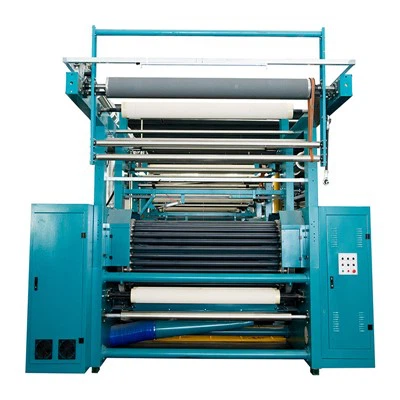
![Circular Knitting Slitting Machine]() Circular Knitting Slitting Machine
Circular Knitting Slitting MachineThe Circular Fabric Slitting Machine (also known as Fabric Slitter or Tubular Fabric Opener) is specialized equipment in the finishing process for tubular knitted fabrics. It is primarily used to

Why Choose Us
Customization
We offer tailored solutions based on customer requirements such as production capacity, process conditions, and workshop layout, delivering non-standard equipment to improve efficiency and application flexibility.
Service and Support
We provide full after-sales support, including installation, commissioning, operator training, and ongoing technical assistance, ensuring stable equipment performance in daily operation.
R&D Capability
The company operates a dedicated R&D team and introduces 1–2 new products each year. So far, it has obtained 31 patents and 7 software copyrights, supporting continuous product improvement and technical development.
Global Presence
Our equipment has been supplied to countries including Egypt, Turkey, India, Vietnam, and Brazil. Through consistent product performance, we have built stable cooperation with international clients and established a reliable global market presence.
Specification
|
Machine Width |
1800mm - 3400mm ( Customizable) |
|
Mechanical Speed |
0 - 80 m/min ( Stepless Speed Regulation) |
|
Slitting Method |
Circular Knife, Hot Knife |
|
Slitting Accuracy |
±5mm |
|
Centering Method |
Photoelectric Automatic Centering |
|
Power Supply |
380V / 50Hz |
|
Fabric Range |
Tubular Knitted Fabrics, Interlock, Rib, Ponte Roma, Polar Fleece. |
Advantages of Slitting Machine
Precision Cutting
One of the main functions of a slitter is to provide precise cuts. The blades used in slitting machines are engineered to ensure clean, accurate cuts, which is crucial to maintaining the quality of the final product.
Production efficiency
Slitting machines are designed to operate at high speeds, allowing manufacturers to process large volumes of material quickly. This efficiency is critical in an industry where time is money, as it allows companies to meet production deadlines and reduce labor costs.
Versatility
Slitting machines are versatile and can handle a variety of materials. Manufacturers can adjust slitter settings to accommodate different materials and thicknesses, making it a flexible solution for varying production needs.
Customization
Another important feature of the slitting machine is the ability to customize the width and length of the slit material. Manufacturers can set up machines to produce strips of different widths, providing customized solutions to meet specific customer requirements.
Waste Reduction
Slitting machines help reduce material waste by providing precise cuts and allowing for customization. Efficient slitting processes ensure manufacturers maximize raw material utilization, resulting in cost savings and a more sustainable production process.
Manual or Semi-automatic slitters
Suitable for small workshops or limited production.
Operators adjust blade width manually and control speed with basic settings.
Fully Automatic Fabric Slitting Machines
Used in high-volume textile factories. Ideal for hygiene materials, medical fabric rolls, nonwoven production lines, and industrial textiles.
Ultrasonic Slitting Machines
Use ultrasonic energy to cut and simultaneously seal edges.
Prevents fraying — ideal for synthetic fabrics like polyester, nylon, and PP nonwoven.
Hot-Knife Slitting Machines
Cut using heated blades, melting the edge to form a clean, sealed border.
Used for ropes, straps, webbing, and synthetic industrial textiles.
Crush/Score Slitters for Nonwoven Fabrics
Common in hygiene-material production (diapers, wipes, medical substrates).
These machines apply pressure onto an anvil to cut soft, nonwoven fabric cleanly.
Key Components of Slitting Machine
A slitting machine is a device used to cut fabrics, usually consisting of the following main parts:
Feed System: This is the part that feeds the fabric into the slitting machine. It usually includes a roller system to keep the fabric stable during the cutting process.
Cutting System: This is the part that actually does the cutting. The cutting system usually includes a cutter, which can be a circular blade, rotary blade, or other type of cutter. These cutters can move along a straight line or curve to cut the fabric.
Positioning system: This system is used to ensure that the fabric is correctly positioned during the cutting process. This may involve sensors, markers or other devices to ensure that each piece of fabric is cut to the correct size and shape.
Control system: This is the brain of the entire slitting machine, responsible for monitoring and controlling the cutting process. The control system is usually controlled by a computer or PLC, which can automatically adjust the cutting speed, tool position, etc. according to preset parameters.
Outfeed system: After cutting, the fabric needs to be moved out of the slitting machine. The outfeed system usually includes a collection device to collect the cut fabrics and ensure that they are not mixed or damaged.

Working Process of Slitting Machine
Loading the Fabric Roll: The process begins with placing a large roll of fabric onto the machine's unwinding station. Sensors ensure proper alignment for smooth feeding.
Adjusting Settings: Operators set parameters such as desired width, cutting speed, and blade tension via a digital interface. Modern machines allow for quick adjustments to accommodate different fabric types.
Feeding and Cutting: The fabric is fed through the machine, where automated blades or rotary cutters perform precise cuts based on the preset dimensions. Sensors monitor fabric tension and alignment to prevent errors.
Winding the Cut Fabric: The narrower fabric strips are wound onto separate rolls or cut into sheets, depending on the application. Automated tension control ensures consistent winding quality.
Unloading and Inspection: Finished rolls are automatically discharged for further processing or packaging. Some machines include quality checks to detect defects or irregularities during operation.
Applications of Slitting Machine
Apparel Manufacturing
Producing fabric strips for garments, ensuring precise widths for different clothing components. Results in less waste and faster production cycles.
Upholstery and Furniture
Creating narrow fabric strips for padding, covers, and decorative elements. Consistent sizing improves fit and finish.
Technical Textiles
Cutting specialized fabrics used in automotive, aerospace, or medical applications. Precision ensures compliance with strict specifications.
Industrial Applications
Preparing fabric for filtration, insulation, or reinforcement, where uniformity impacts performance and durability.
Customization Services
To better meet the diverse needs of different textile slitting and finishing applications, we provide customized slitting machine solutions based on fabric types, slitting configuration, working width, tension control requirements, and production capacity. OEM and ODM services are available. For more information or technical support, please feel free to contact us.
Packaging and Shipping
|
Packaging |
Wooden case |
|
Transportation methods |
Road transport, rail transport, sea transport |
FAQ
Jiangsu Feng Te Technology Co., Ltd. is well-known as one of the leading slitting machine manufacturers and suppliers in China. With a professional production team, we are able to meet the needs of the majority of our customers. Please rest assured to buy discount slitting machine for sale here from our factory.
slitting cutting machine, fabric slitting machine, slitters