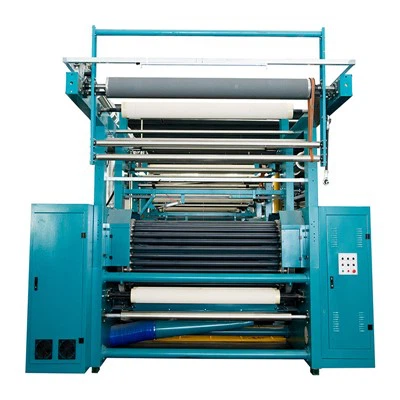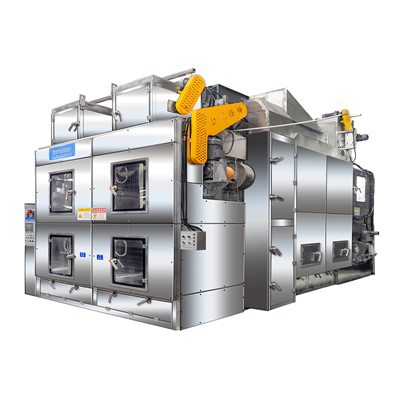
A heat treatment machine works by using high-temperature heated rollers to heat-treat the surface of the fabric under certain pressure. The heat and pressure make the fiber surface smooth, flat, or fluffy, thereby improving the fabric's appearance, luster, and feel.
Heating and Pressure: The core component of a heat pressing machine is a high-temperature heated roller (heat pressing roller). When the fabric passes through the roller, the heat from the roller (usually achieved through electrically heated heat-conducting oil, with a maximum operating temperature of 220℃) and the applied pressure work together on the fabric surface.
Surface Treatment Effect: This combination of heat and pressure can open up fiber twist, flatten the fiber surface, or orient it, thereby giving the fabric the desired smoothness, bulkiness, or straight, glossy appearance.
A hot stamping machine utilizes the principle of hot stamping. Material is placed on a hot stamping plate, and under high temperature and pressure, the surface of the material melts, imprinting the pattern onto the material. As the hot stamping plate moves, the imprinted material is cooled and rolled up to obtain the finished product.
A hot stamping machine mainly consists of a heating system, a die-casting system, and a control system. The heating system heats the hot stamping plate, raising its surface temperature to a specific level. The die-casting system provides pressure to the hot stamping plate, ensuring full contact and imprinting with the material surface. The control system is the brain of the hot stamping machine, controlling variables such as heating, pressure, stamping time, and speed to control the stamping effect.